How Unreal Engine Is Changing Interactive Product Experiences
From static renders to living, breathing digital worlds — Unreal Engine is rewriting the rules of how brands connect with their audiences. Explore how real-time 3D is transforming product visualization, automotive design, retail, and beyond into fully interactive experiences that drive measurable results.
The Era of Static Limitations
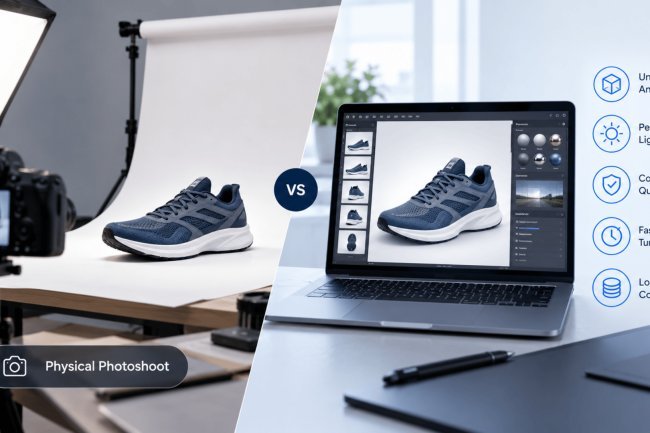
Before real-time 3D engines transformed the creative landscape, product marketing was trapped inside a rigid, slow-moving pipeline. Traditional campaigns relied almost entirely on pre-rendered 2D images — beautiful, perhaps, but fundamentally flat. Customers browsing online could see a product but never truly experience it. There was no way to rotate, configure, or interact with a product in a meaningful way, leaving a critical tactile and emotional gap between the customer and the purchase decision.
From Static Viewing to Interactive Experience
The Tactile Deficit
Static imagery failed to replicate the physical act of handling a product. Customers shopping online were forced to make high-value decisions based on a handful of fixed camera angles and generic lifestyle shots.
This disconnect directly contributed to elevated return rates and reduced buyer confidence, especially in categories like furniture, automotive, and consumer electronics where materiality and scale matter enormously.
Painful Feedback Loops
For design teams, the creative process was equally frustrating. Testing a simple color variation on a product render required submitting a new job to a render farm and waiting hours — sometimes overnight — for results.
Iterating on lighting, material finishes, or environmental context was expensive, slow, and deeply inefficient. Product launches were bottlenecked by the rendering pipeline itself, limiting agility at exactly the moment teams needed it most.
Early VR: Proof of Concept, Not Execution
Brands like IKEA and Volvo were early movers, experimenting with basic virtual reality room visualizations and vehicle walkthroughs. These experiments validated the hypothesis — immersive environments genuinely drove customer interest and engagement.
However, the experiences were largely passive and lacked dynamic interactivity. Users could look around a virtual space but couldn't reconfigure it in real time, leaving the full potential of the medium frustratingly out of reach.
Static Era
Fixed Images
Limited Angles
Slow Rendering Cycles
Minimal Interaction
Lower Buyer Confidence
The Root Cause
The static creative era wasn't a failure of imagination — it was a failure of available technology.
The Turning Point
Real-time 3D changed everything.
View → Interact → Configure → Experience
Real-Time 3D Evolution
The Real-Time Revolution
The year 2020 marked a decisive inflection point. As digital-first commerce accelerated and consumer expectations for personalization reached new heights, brands began migrating to real-time 3D pipelines powered by Unreal Engine. The shift wasn't incremental — it was transformative. For the first time, a single engine could render photorealistic environments at interactive frame rates, allowing brands to build experiences that responded dynamically to user input, scale across multiple platforms, and eliminate the hours-long rendering wait times that had previously crippled creative agility.
The Inflection Point
2020
Digital-first commerce accelerated the migration to real-time 3D pipelines.
The New Capability
60fps
Interactive frame rates support photorealistic rendering and live user interaction.
The Commercial Signal
71%
Engagement uplift reported for real-time 3D experiences compared with static digital ads.
01 / Automotive ◈
Automotive Leadership
GMC HUMMER EV
Unreal Engine-powered digital cockpit
Rivian R1T
Unreal Engine-powered digital cockpit
The automotive sector led the charge. The GMC HUMMER EV and Rivian R1T both introduced Unreal Engine-powered digital cockpits, setting an entirely new benchmark for Human-Machine Interfaces (HMI). These weren't just infotainment screens — they were fully rendered, interactive environments inside the vehicle itself, with realtime reflections, dynamic lighting, and configurable UI elements that felt native to the gaming generation of consumers. This set a new standard that legacy automakers are now racing to match.
02 / Performance ↗
Measurable Engagement Gains
The business case for real-time 3D quickly became undeniable. Brands leveraging interactive Unreal Engine experiences reported a 71% increase in engagement compared to equivalent static digital advertisements. Users spent significantly more time interacting with configurable 3D product viewers than scrolling past traditional image carousels. Conversion intent, brand recall, and time-on-page all improved markedly. Real-time 3D wasn't just a creative upgrade — it was a measurable commercial advantage that justified the investment in new tooling and talent.
03 / Industry Expansion ▦
Retail & Media Transformation
Beyond automotive, real-time 3D began reshaping retail and media production. Fashion brands adopted virtual try-on tools. Media companies integrated UE-powered virtual sets into broadcast production. The democratization of photorealistic rendering at interactive speeds meant that experiences previously reserved for AAA game studios were now accessible to marketing teams, product designers, and retail strategists across every vertical.
Virtual Try-On Virtual Sets Product Design Retail Strategy
The Real-Time Revolution at a Glance
71%
Engagement Uplift
Increase in engagement vs. static digital ads for brands using real-time 3D experiences.
2020
The Turning Point
The year brands began migrating en masse to real-time 3D pipelines for product and marketing experiences.
60fps
Interactive Frame Rate
Unreal Engine delivers photorealistic rendering at real-time speeds, enabling live user interaction and configuration.
Convergence: The New Standard
We have entered an era of convergence. A single, unified creative pipeline now powers photorealistic product visualization, live stadium augmented reality, interactive virtual showrooms, and immersive digital worlds — bridging gaming, commerce, and broadcast media. What was once a collection of siloed tools has increasingly collapsed into one real-time ecosystem, with Unreal Engine as a central platform. [412][413][418]
01
Industry Use Case
Advanced Automotive Visualization
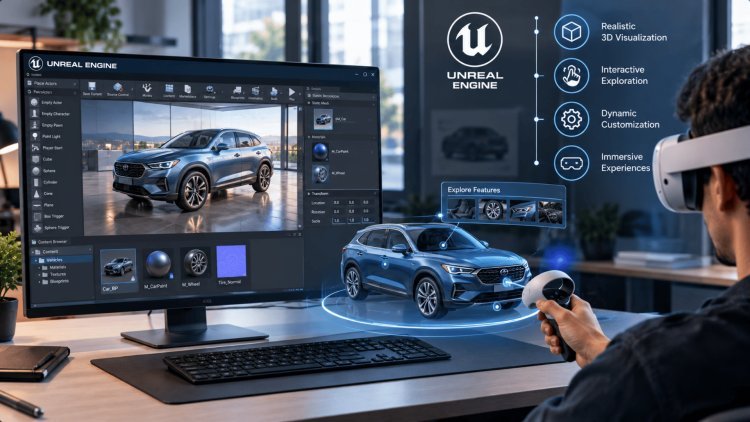
Unreal Engine can turn CAD-derived product data into interactive, photorealistic experiences. Users can change paint finishes, swap trims, and evaluate lighting in real time. CAD data generally requires optimization before real-time use, but the result can compress the distance between design ideation and stakeholder signoff. [412][413][415]
02
Industry Use Case
Real Estate & Retail Configurators
Luxury real estate developers and premium retailers are replacing static brochures and floor plans with real-time 3D configurators. Buyers can explore a property or product, select finishes, layouts, and lighting scenarios before purchase — building confidence through interactive visualization. [412][418][421]
03
Industry Use Case
One Pipeline, Every Channel
The same Unreal Engine pipeline can support a virtual showroom, live stadium LED graphics, virtual-production backgrounds, and interactive storefronts. This convergence reduces the need for separate specialist toolchains and enables more cohesive brand experiences across touchpoints. [419][424][425]
35%
Reported conversion uplift from luxury real-estate and retail brands adopting real-time 3D configurators over static sales tools. [418]
28%
Reported reduction in product return rates when customers configure and visualize purchases interactively before buying. [418]
1
Pipeline that can serve product visualization, live AR, broadcast, and virtual retail. [412][419][425]
Automotive
From CAD data
to live experience
How It Works
Unreal Engine accepts exports from leading CAD and 3D tools, while its automotive configurator workflow supports real-time ray tracing, Variant Manager, Blueprint visual scripting, and Sequencer. Teams can customize paint, trim, wheels, interiors, and other options, then render stills or cinematics from the same asset set. [412][414][415]
One Pipeline. Every Channel.
Product
Visualization
Live Stadium
AR
Virtual
Production
Virtual
Retail
The same real-time engine can render a bespoke virtual showroom, power LED-wall graphics, drive virtual-production backgrounds, and fuel an interactive storefront — without fundamentally changing the underlying architecture. [419][424][425]
The Bottom Line
Convergence is not just a technical milestone — it is a fundamental restructuring of how industries conceptualize, design, and sell.
One real-time pipeline can now serve product visualization, live AR, broadcast, and virtual retail across every major industry.
Beyond the Screen: A Call to Action
Unreal Engine has evolved from a game development framework into core infrastructure for modern commerce, broadcast, architecture, automotive launches, and immersive customer experiences. The next decade belongs to brands building worlds, not merely producing assets.
Competitive Reality
Static creative pipelines are no longer outdated.
They're a competitive liability.
Your Next Move
Customers no longer want to simply view products. They expect to configure, explore, compare, and experience them before committing. Real-time 3D configurators, immersive environments, and interactive brand worlds are rapidly becoming the new customer expectation.
Future Loyalty Is Built on Experience
The strongest brands will not be those with the most impressions. They will be the ones offering the most memorable and personalized customer journeys before purchase.
????
Audit Your Pipeline
Identify where static assets, lengthy approvals, and traditional sales tools are slowing customer engagement.
????
Build the Business Case
Connect engagement lifts, conversion gains, and operational efficiency directly to measurable revenue outcomes.
⚡
Partner for Execution
Work with Unreal Engine specialists capable of delivering real-time production systems at commercial scale.
The Opportunity Window
The brands winning the next decade
won't tell better stories.
They'll build better worlds to step inside.
Real-time 3D is no longer a trend to observe. It is a capability to develop. The convergence of storytelling, commerce, and interactive technology has already begun reshaping customer expectations. The organizations that move now will define the experience standards everyone else follows.