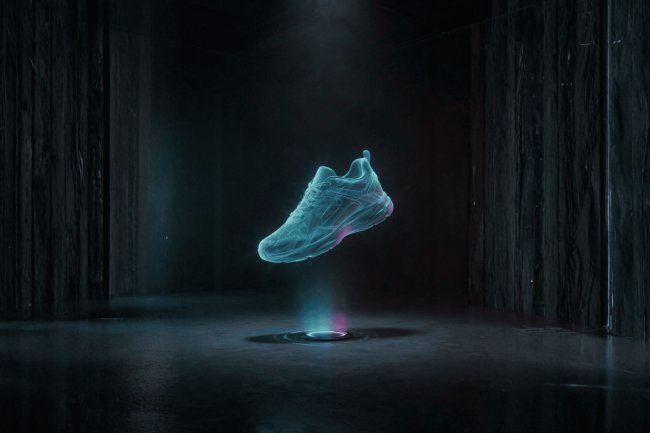
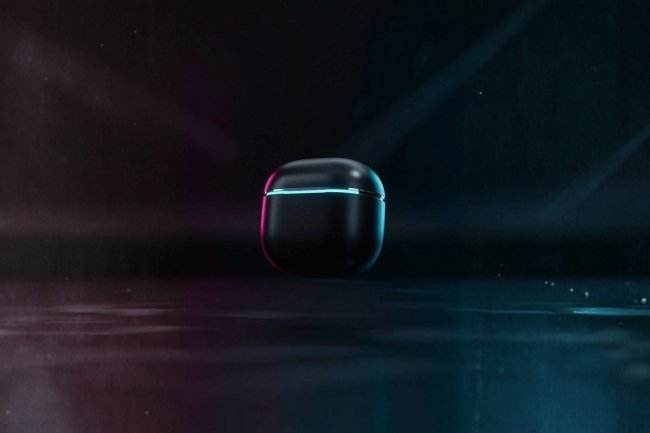
Photorealistic 3D Product Visualization for E-Commerce Campaigns
The era of flat studio photography is giving way to something far more powerful. Brands that invest in photorealistic 3D product visualization are winning on product pages, paid ads, and social campaigns — delivering immersive experiences that drive confidence, reduce returns, and scale across every channel from a single digital asset. This presentation explores why 3D CGI/VFX is the future of e-commerce content, and how Digiverse.studio helps brands build that future.
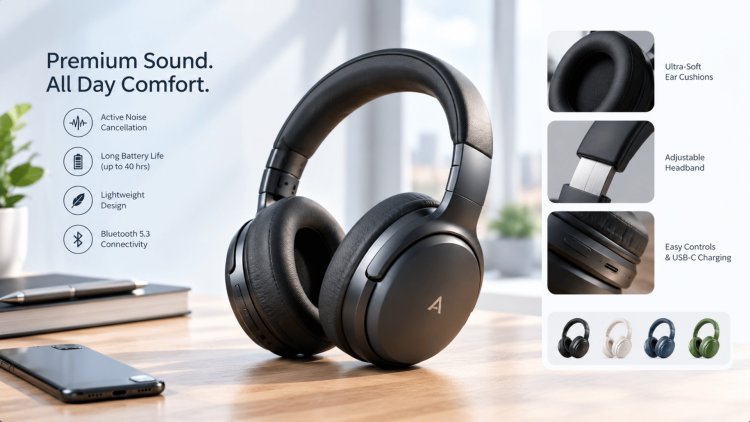
The Problem: Photos Can't Answer "Will It Fit, Look, and Feel Right?"
Traditional product photography has long been the backbone of e-commerce content — but it has a fundamental limitation. Static images, no matter how well lit or professionally composed, cannot replicate the tactile and spatial confidence that shoppers need before committing to a purchase. The result? Hesitation, abandoned carts, and costly returns that erode margin and brand trust.
The Shopper's Dilemma
Modern consumers are sophisticated. They want to know how a sofa fits a 10-foot living room wall, how a pair of sneakers looks from the heel, or whether a pendant lamp's scale suits a dining table. Static "hero shots" simply cannot answer these spatial and contextual questions — no matter how many angles you shoot from.
Shoppers need rotation, zoom, and real-world context to judge fit and proportion.
A single flat image leaves too much to imagination — and imagination breeds doubt.
Uncertainty at the point of purchase is the #1 driver of impulse abandonment.
The Hidden Cost of Returns
Return rates in e-commerce average 20–30% across categories — far higher than brick-and-mortar retail. A significant share of those returns are driven not by product defects, but by a simple mismatch between expectation and reality.
The customer imagined something different from what arrived. This is a content problem, not a product problem — and it has a content solution.
Visual Gaps
Classic studio imagery leaves critical visual gaps that fuel return risk.
Conversion Edge
Competitors who invest in richer visual content consistently outperform on conversion.
Reverse Logistics
Every return costs brands an average of 3–4x the original shipping cost in reverse logistics.
What The Shopper Imagines
Estimated Size
Assumed Proportion
Limited Angles
Incomplete Context
What The Shopper Needs
Real Scale
Product Rotation
Zoom Detail
Environmental Context
The Real Issue
A mismatch between expectation and reality is rarely a product failure. More often, it is a visualization failure.
Final Takeaway
The gap between what a shopper imagines and what they receive is a content problem — and photorealistic 3D is the solution that bridges it.
Confidence → Clarity → Conversion → Fewer Returns
Interactive Product Experiences
The Shift: 3D That Customers Can Actually Interact With
Photorealistic 3D visualization is no longer a luxury reserved for automotive campaigns or luxury fashion houses. Advances in real-time rendering, WebGL, and augmented reality have made immersive, interactive 3D product experiences accessible to brands across every category — from furniture and consumer electronics to beauty, footwear, and home goods. The shift is happening now, and early adopters are pulling ahead.
360° Rotation & Zoom
Photorealistic 3D models allow shoppers to rotate a product through every angle and zoom into surface textures, stitching details, or hardware finishes — replicating the in-store "pick it up and look at it" experience. Customers who interact with a 3D model spend significantly more time on a product page and convert at measurably higher rates. This isn't a novelty feature; it's a fundamental upgrade to the shopping experience that modern CGI/VFX pipelines are purpose-built to deliver.
Product Viewer 360°
Rotate · Inspect · Zoom
WebAR Preview
⌖
Real-world placement
Experience products in your environment
WebAR: Products in the Real World
WebAR-style experiences allow shoppers to place a virtual product directly into their real environment — no app download required. Point a phone camera at a corner of the room and see how a lamp looks beside the armchair. Place a watch on a wrist virtually. These experiences dramatically reduce the cognitive leap between "product page" and "in my home," delivering the spatial confidence that drives purchase decisions. The best part: it runs entirely in the browser, making adoption frictionless for customers and brands alike.
Virtual Detail Inspection
Interactive 3D goes beyond aesthetics. Customers can inspect zippers, examine weave patterns, evaluate finish quality, and explore product dimensions with a level of precision that even in-store shopping rarely affords. By letting customers virtually "handle" a product before buying, brands remove the residual uncertainty that triggers post-purchase regret and returns. This capability — central to the Digiverse content system — directly translates to lower return rates and higher customer satisfaction scores across campaigns.
Detail Inspection
Weave Patterns
Surface texture
Surface Finish
Material details
Dimensions
Product proportions
How Digiverse Produces Campaign-Ready CGI/VFX Visuals
Digiverse.studio is not a traditional creative agency or a photography studio with a 3D department bolted on. It is a full-stack digital content system built around CGI/VFX, interactive 3D, and performance-driven creative strategy — designed to produce product visuals that work across paid, organic, social, and commerce channels. [397][398][404]
Capability 01
CGI/VFX Product Films & Unreal Engine Visuals
Digiverse produces premium product films using CGI and VFX pipelines, including Unreal Engine for campaigns requiring cinematic realism and real-time interactivity. These are fully art-directed visual stories where lighting, environment, physics, and motion are crafted with production-level precision. [398][403][408]
Capability 02
An Integrated Content System
The pipeline blends short-form video, UGC-style ad creative, and GEO/AI SEO strategy with premium CGI/VFX output. A single product asset can be adapted for Instagram Reels, Google Shopping, email campaigns, and interactive 3D product pages — maximizing return on every creative investment. [397][404][406]
The Shift
Why 3D is
replacing the lightbox
From One-Shoot Assets to Living Assets
Traditional lightbox photography produces a fixed set of images. A 3D pipeline produces a reusable master asset: change materials, colorways, lighting, environments, or camera angles without a reshoot. One model can generate campaign-ready images, interactive experiences, and short-form video clips at a fraction of the cost of repeated live photography. [397][402][405]
One 3D Asset. Many Campaign Outputs.
Instagram
Reels
Google
Shopping
Email
Campaigns
Interactive
Product Pages
A single 3D file can support hero images, animated ads, 360° viewers, and AR models; the same underlying asset can be adapted across channels without triggering a new production cycle. [404][405][406]
The Digiverse Production Workflow
Brief
& Strategy
Build
3D Asset
Art Direct
Scene
Render
Formats
Optimize
For Channels
The workflow begins with campaign strategy and a validated 3D asset, then moves through art direction, lighting, simulation, rendering, and channel-specific adaptation. Unreal Engine supports photoreal rendering, dynamic lighting, virtual sets, and interactive product experiences from a single project. [398][401][403]
Traditional Lightbox
One shoot, one set of assets
Each new colorway, angle, environment, or campaign context often requires a new physical shoot, sample logistics, studio time, and retouching cycle. [397][406]
3D Content System
One model, many campaigns
A validated 3D model becomes a reusable foundation for variants, environments, animations, interactive experiences, and future campaign updates. [397][402][405]
The Bottom Line
The future of product content is not a photoshoot — it is a reusable 3D content system.
Build cinematic CGI, adapt it across channels, and turn every product asset into a compounding creative investment.
The Result
Faster, Scalable Product Content That Converts
The true competitive advantage of photorealistic 3D product visualization is not just visual quality — it is systemic scalability. Once a digital asset exists, it can be deployed across every campaign surface, adapted to new environments, updated with new colorways, and repurposed for new channels — all without a single reshoot. This is the compounding content advantage that separates brands that invest in 3D from those still booking studio time for every SKU update.
One Asset, Every Channel
Generate product page imagery, paid social ads, email headers, Google Shopping visuals, and interactive 3D experiences from the same core digital asset. A single high-fidelity 3D model becomes an inexhaustible content library — updated, relit, and re-contextualized for every campaign without additional production cost. This is the core promise of a modern content system.
One high-fidelity 3D model
↓
Product page imagery
Paid social ads
Email headers
Google Shopping visuals
Interactive 3D experiences
Strategy → Create → Scale
Digiverse operates on a proven three-phase content system. Every phase is designed to build on the last, compounding returns over time.
1
Strategy Kickoff
Define goals and asset needs
Aligning on brand goals, audience targeting, and channel mix.
2
Produce 3D assets and refine
Producing CGI/VFX assets, short-form video, and interactive 3D.
3
Deploy & Scale
Distribute assets for growth
Launching across channels with performance tracking and iterative optimization for measurable growth.
Measurable Growth Outcomes
Brands that make the shift to 3D-first content systems report consistently stronger outcomes:
Lower bounce rates on product listings
Improved add-to-cart rates
Meaningfully lower return rates
as customer expectations align more precisely with the delivered product
The ROI case for photorealistic 3D is no longer theoretical — it is measurable, repeatable, and channel-agnostic.
The brands winning e-commerce in the next five years are the ones building these content systems today.
Ready to build a 3D content system that scales? Explore the full range of Digiverse services and go deeper on production methodology with the CGI/VFX & Product Visualization blog.
The shift to photorealistic 3D is not a trend — it is the new standard for e-commerce brands that compete on experience, not just price.